





We are Visa and Migration Advisory Service – a team of professionals with vast experience in the legal matters relating to Australian visa and migration law. We have the highest success rate with majority of our clients receiving positive outcomes on their visas.

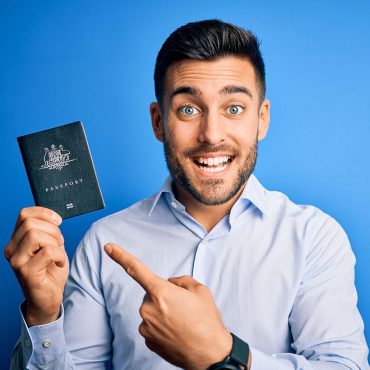
We feel a great personal responsibility for every case that we take on. We realize with all our heart that behind every case is the fate of a person and his or her entire family. That’s why, if we take on a client, we combine all our resources, energy and faith to ensure the success!
Before taking the case, we assess a potential client’s eligibility for an Australian visa. Other agents have turned down many of our clients, who successfully remained in Australia with our help.

New Australians Created
Successful Visa Applications
We have been successfully helping people to migrate to Australia for over 20 years and know Australian immigration law insight out. However, we totally understand that most people might not understand how to immigrate to Australia, what paths are available, where to begin etc. If you are new to the notion of relocating to Australia, this article is for you.
Four major paths pf Australian immigration:
This is it! You might notice that there is no “Immigration to Australia through Education” or “Work in Australia and then stay in the country” programs. Temporary work and study in Australia do not lead to permanent residency on their own. After working or studying in Australia, you are most likely to go via the Skilled Migration route, if you want to migrate to Australia for good.
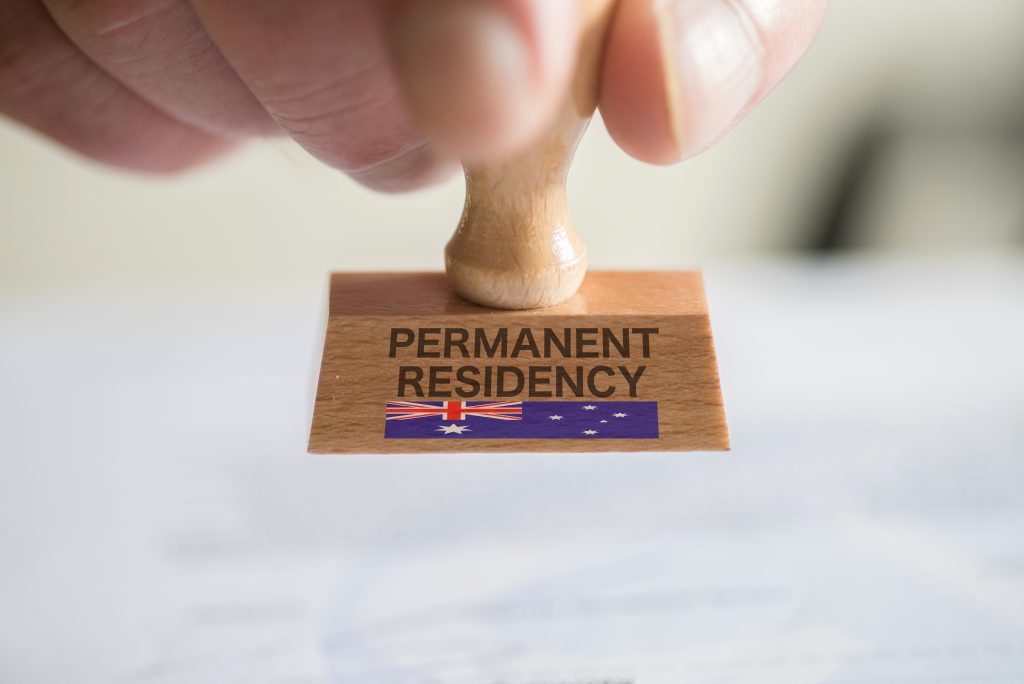
There are more than 120 types of visas to Australia. In addition, the Australian immigration law is constantly evolving. It can be quite challenging to complete a visa application correctly and hope for a positive result without the knowledge of nuances of Australian visa and immigration legislation.
Contact us today by fill up free online visa assessment and we will contact you
Want to live and work in Australia?
To qualify, you must be under 45, speak English well, and have skills in demand on Australia’s Skilled Occupation List. Your work experience and job tasks often matter more than your diploma title.
Main visa options:
- Subclass 189: Skilled Independent – no state or employer sponsorship required.
- Subclass 190: Skilled Nominated – requires state or territory nomination.
- Subclass 491: Skilled Work Regional – regional nomination or family sponsorship.
Watch our video blog for a step-by-step explanation or visit the Skilled Migration page for full details.


Australia is home to six of the world’s top 100 universities: University of Melbourne, Australian National University, University of Sydney, University of Queensland, University of New South Wales, and Monash University.
Seven Australian cities – Melbourne, Sydney, Brisbane, Canberra, Adelaide, Perth, and the Gold Coast – are ranked among the best student destinations globally.
With a Student Visa (subclass 500), you can:
- Enrol in a recognised course
- Work part-time during studies
- Bring family members with you
This visa may open pathways to permanent residency after graduation. For details, visit the Student Visa page.
Bring your loved ones to Australia without points tests or English exams. You must have a close family member who is an Australian citizen or permanent resident.
Visa options:
- Partner Visas – for spouses, de facto partners, and fiancés/fiancées. The Department of Home Affairs checks relationship evidence carefully. Application fees are high and non-refundable if refused, so many couples work with registered migration agents.
- Parent Visas – for parents meeting the Balance of Family Test (at least half of your children live in Australia).
- Other Family Visas – for children, remaining relatives, or carers under specific conditions.
Visit the Family Migration page for eligibility and document requirements.


This path is for those individuals that have plenty of money or a serious experience running a business. Minimum requirement for this visa is total net business and personal assets of at least AUD1.25 million.
This path might suit businessmen or investors that are under 55 years of age and have no English, as there are visas within the Business Migration stream that allow Australian immigration without English knowledge (you would need to pay a fee of about AUD$10000 for the English classes through).
Here you will find more information about various business programs and its requirements.
Australian businesses can sponsor skilled workers when local talent isn’t available. To qualify, workers must have a relevant occupation , meet skills and English criteria, while employers must:
- Provide a full-time contract
- Pay the market salary rate
- Contribute to the Skilling Australians Fund
Key visa options:
- Subclass 482: Temporary Skill Shortage – 2–4 years, possible PR pathway
- Subclass 494: Skilled Regional – up to 5 years, with PR option
- Subclass 186: Employer Nomination Scheme – permanent residency
Get full guidance on obligations and requirements on the Employer Sponsored Visas page.


Planning a short stay, family visit, or business trip?
Visa options:
- Tourist & Visitor Visas (subclass 600, ETA 601, eVisitor 651) – for tourism, visiting family, or business trips. ETA and eVisitor visas offer quick online approval for stays up to 3 months for eligible nationalities.
- Working Holiday Visas (subclass 417, 462) – for young people wanting to work and travel in Australia.
- Training & Temporary Activity Visas (subclass 407, 408) – for training, research, or cultural exchange activities.
For more information about applying for a Tourist Visa or Visitor Visa to Australia, please visit the Short-Stay Visa page.
We’ll help you pick the right visa for your trip.
The latest from Australian Migration news, information, announcements, developments and articles about Immigration and Visas to Australia.
More details:
Immigration to Australia from Zimbabwe: Full Visa & Relocation Support
Immigration to Australia from Zimbabwe requires navigating complex visa regulations, meeting strict eligibility criteria, and preparing accurate documentation. Sydney Visa provides end-to-end assistance for Zimbabwe citizens, from initial eligibility checks to visa grant and post-arrival guidance. Services are available remotely from anywhere in Zimbabwe, including Harare, Bulawayo, and Mutare, or through in-person meetings at the Sydney office in Pyrmont. All consultations are delivered by registered migration agents with valid MARN numbers, ensuring legally compliant handling of every application stage. The process covers skilled migration, work visas, student visas, family reunions, and business pathways.
Australian Visa Pathways for Zimbabwe Citizens
Australian immigration law offers several pathways for citizens of Zimbabwe seeking to relocate permanently or temporarily. The right program depends on qualifications, age, work experience, English proficiency, family situation, and long-term goals.
General Skilled Migration. The General Skilled Migration (GSM) program targets qualified professionals whose occupations appear on the skilled occupation lists (MLTSSL or STSOL). Applicants must complete an English language test (IELTS or PTE) and achieve a minimum points score under the SkillSelect system. State or territory nomination (Subclass 190) or family sponsorship (Subclass 491) increases the chances of receiving an invitation. For Zimbabwe citizens with degrees in engineering, IT, healthcare, accounting, or teaching, this is a common pathway to permanent residency.
Employer Sponsored Visas. Employer sponsored visas (Subclass 482 Temporary Skill Shortage, Subclass 186 Employer Nomination Scheme) require a job offer from an approved Australian employer. The employer acts as a sponsor and assumes specific obligations, including paying the Skilling Australians Fund levy. For applicants from Zimbabwe with at least two years of relevant work experience, a confirmed job offer, and skills in demand, this is often the fastest route to work rights and subsequent permanent residence. The employer must hold Standard Business Sponsorship (SBS) status.
Family Visas. Family stream visas (Partner visas Subclass 820/801, Parent visas Subclass 103/143, Child visas Subclass 101/802) are available to Zimbabwe citizens with close relatives who are Australian citizens, permanent residents, or eligible New Zealand citizens. Partner visas require proof of a genuine and continuing relationship. Parent visas have significant processing times (up to 30 years for the non-contributory parent visa) and high application fees for contributory options. For Zimbabwe citizens with family already in Australia, this pathway minimizes age and skills requirements.
Student Visas. Student visas (Subclass 500) allow Zimbabwe citizens to study at Australian schools, colleges, or universities. After completing at least two years of study, graduates may apply for a Temporary Graduate visa (Subclass 485), which permits working in Australia and gaining local qualifications that can lead to permanent residency. Zimbabwe applicants must demonstrate genuine temporary entrant (GTE) intent, sufficient financial capacity (tuition fees plus living costs of approximately 24,505 AUD per year), and meet English language requirements (IELTS 5.5 or equivalent).
Business and Investor Visas. Business visas (Subclass 188 Business Innovation and Investment, Subclass 132 – closed to new applications, replaced by Subclass 188 extensions) are designed for experienced business owners and investors. Zimbabwe citizens with a successful business history, net assets of at least 1.25 million AUD, and a genuine commitment to manage a new or existing business in Australia may qualify. These visas require a state or territory nomination and a formal business plan. Due to high asset requirements and complex documentation, professional assistance is strongly recommended.
What Is Included in Immigration Support from Zimbabwe
Full assistance under the australia immigration zimbabwe program includes a structured set of actions designed to minimize refusal risks and accelerate decision times. Services are delivered under a formal agreement with staged payments or a fixed fee covering the entire process.
Scope of Services. The standard service package for migrate to australia from zimbabwe includes: free online eligibility assessment via the website form, detailed analysis of all documents and qualifications, optimal visa pathway selection, preparation and verification of all application forms and supporting evidence, application lodgment through the ImmiAccount portal, ongoing correspondence with the Department of Home Affairs, interview preparation (if required), response drafting for any Requests for Information (RFI), and status notifications at every stage. For complex cases (previous refusals, incomplete documents, criminal record issues, health concerns), specialized migration agents handle the file personally.
What Is Not Included. Government application fees (set by Australian authorities and varying by visa type from 650 AUD for student visas to over 9,000 AUD for business and parent visas) are not included. Medical examination costs (Zimbabwe applicants undergo health checks at approved panel clinics – currently available in Harare at designated panel physicians). Certified translations of documents into English (personal papers, diplomas, employment records, police clearance certificates). Notarization of copies. English test fees (IELTS, PTE, TOEFL, OET). Skills Assessment fees (from 500 to over 2,000 AUD depending on the assessing authority). These expenses are paid by the applicant directly to the respective service providers based on official invoices.
Factors That Affect Processing Times and Conditions
Processing duration for australia migration zimbabwe ranges from 3 months to 2 years, depending on the chosen program, departmental workload, application quality, and completeness of submitted evidence. The conditions of relocation (work rights, study permissions, healthcare access, family inclusion) are defined by the specific visa subclass.
Key Factors Influencing Application Review. Completeness and accuracy of submitted documents: any inconsistency, missing translation, or error in dates generates a Request for Information (RFI) and delays processing by 1–3 months. Achieving a competitive points score under SkillSelect (for GSM) – higher scores (85+) lead to faster invitations, while scores just above the pass mark (65) may result in long waiting times or no invitation at all. Employer accreditation status (for sponsored visas) – if the employer holds Accredited Sponsor status, priority processing is available. Previous visa refusals in any country, including Zimbabwe, require additional explanations, statutory declarations, and thorough background checks. Health issues requiring further assessment or a health waiver can add 2–6 months.
Typical Processing Timeframes. Skilled migration from Zimbabwe (Subclass 189, 190, 491): average 8–14 months from EOI submission to visa grant. Employer sponsored visas (Subclass 482): 3–6 months provided the employer is already an approved sponsor and the nomination is straightforward. Student visas (Subclass 500): 1–4 months when financial capacity and GTE requirements are properly documented. Partner visas (Subclass 820/801): minimum 12–24 months for the temporary stage, with the permanent stage assessed 24 months after lodgment. Business visas (Subclass 188): 12–18 months due to complex financial and business verification. During peak seasons (August–November), processing slows by 15–20% across all visa types.
Service Option | What Is Included | Best For |
Basic Consultation | Eligibility assessment + pathway recommendation + document checklist | Applicants with straightforward cases who will lodge independently |
Extended Assistance | Consultation + document verification + form review + RFI support | Applicants with limited time or minor complexities (employment gaps, non-standard documents) |
Full Representation | Strategy planning + Skills Assessment coordination + translation management + application lodgment + full departmental representation | Zimbabwe applicants requiring maximum oversight and risk minimization throughout the entire process |
Step-by-Step Visa Assistance Process
The australia migration services zimbabwe process follows sequential steps, each supervised by a dedicated migration agent. Clients receive access to an online tracking portal showing real-time status.
1. Free Online Eligibility Assessment. The applicant from Zimbabwe completes a free form on the website, providing age, occupation, education, work experience, English level, family status, and intended migration purpose. The system automatically suggests potentially suitable visa programs (skilled, student, family, business, or employer sponsored). Within 24 hours, a migration consultant confirms or refines the result. This step requires no payment and creates no obligation. Approximately 30% of applicants receive an immediate indication that they may be eligible for skilled migration.
2. Detailed Consultation with a Registered Migration Agent. Conducted online via Zoom, WhatsApp, or Skype, or in person at the Pyrmont office in Sydney. An agent with a valid MARN (such as Alexei Grinko or Vitalii Xu) analyzes all provided document scans: passports, diplomas, academic transcripts, employment references, payslips, tax records, marriage and birth certificates. Identifies risks: mismatch between job duties and ANZSCO code, insufficient evidence of work experience, gaps in employment history, non-genuine documents, health concerns, or previous visa refusals. Delivers a written report including: recommended visa subclass, need for Skills Assessment (and which assessing authority), language score targets, options for state nomination, and a personalized strategy to maximize approval chances.
3. Strategy and Pathway Selection. Based on the consultation, a personal migration plan is developed over 3–7 days. For Zimbabwe applicants, three strategies are most common: direct application for an independent visa (Subclass 189) for highly competitive occupations with 85+ points, state nomination (Subclass 190 or 491) for occupations listed on individual state occupation lists, or employer sponsorship (Subclass 186 or 482) for those with a confirmed job offer. Costs, processing times, language requirements, family inclusion options, and geographic limitations (e.g., regional areas for Subclass 491) are compared in a written summary. The final strategy is approved by the client before document collection begins.
4. Document Preparation and Application Lodgment. The agent provides a detailed checklist of 20–25 items specific to Zimbabwe applicants: notarized certified copies of diplomas with academic transcripts, employment reference letters on official company letterhead with detailed duties, bank statements showing sufficient funds (for student visas and certain sponsored visas), valid English test results (IELTS or PTE), medical certificates from an approved panel physician (currently available in Harare), police clearance certificates from the Zimbabwe Republic Police and from any other country where the applicant lived for 12 months or more, birth certificates, marriage certificates (if applicable). Each document is checked against Australian standards. The applicant signs Form 80 (personal particulars) and Form 1221 (additional personal information). The agent completes and lodges the online application through the ImmiAccount portal, with government fees paid either from the client‘s card or by the client following instructions.
5. Case Tracking and Representation. After lodgment, the applicant receives an application ID or TRN. The agent monitors the status daily, responds to any Requests for Information (RFI) within 3 business days. When an RFI is received, the agent drafts a response, collects any additional evidence, and submits it through the portal. When a pre-grant letter is received, the agent prepares the client for final steps: obtaining Overseas Visitor Health Cover (OVHC) or appropriate health insurance, confirming an Australian address, paying any second visa application charge installment. After final approval (Grant), the Visa Grant Notification is sent, and all conditions (validity period, work rights, travel restrictions, study limitations) are explained in a summary document. The client then receives the visa grant electronically and can plan the move to Australia.
Comparison of Service Formats
Three service formats are available for australia migration from zimbabwe, differing in the depth of agent involvement. Each format is clearly defined in the service agreement before work begins.
Basic Consultation. Includes a one-hour consultation with a registered migration agent (online or in-person). The client receives verbal and written recommendations: which visa type to choose, which documents to gather, what English score to target, and a standard document checklist. The client independently completes all forms, arranges translations and notarizations, lodges the application, and communicates with the department. The agent does not review final forms or take responsibility for errors after the consultation. Suitable for Zimbabwe applicants with clean immigration histories, strong English, prior experience lodging visa applications to other countries (UK, Canada, US), and no complexities.
Extended Assistance. Includes a two-to-three-hour consultation plus review of all client-prepared documents and forms (but not form filling by the agent). The agent provides detailed line-by-line comments on each form: for example, Question 36 on Form 80 (travel history for the last 10 years) must list every trip including transit, Question 45 (employment) must precisely match ANZSCO task descriptions. The client makes corrections independently and submits the final package. The agent performs a second, lighter review and gives approval to lodge. After lodgment, the agent helps respond to the first departmental RFI if it is straightforward (e.g., requesting a missing document). This balanced option suits applicants who want to reduce service costs but are not fully confident in their own document preparation or have minor complexities.
Full Representation. Full case management from initial assessment to visa grant. The agent requests all certificates from Zimbabwe authorities, oversees certified translations, completes all online forms on behalf of the client, lodges the application, and provides login credentials to the client for transparency. Receives all departmental correspondence, drafts responses to any RFI (including legally complex ones requiring statutory declarations or submissions). Engages a second agent for specialized advice when needed (e.g., business visas or complex health waivers). Represents the client during embassy interviews (for cases where in-person attendance is requested). Mandatory for Zimbabwe applicants with previous refusals, adverse information (criminal records, health issues), for family applications involving children from prior marriages, for cases with missing or damaged documents (lost diploma, unreadable birth certificate), and for business visa applicants with complex financial structures.
Format | Typical Duration | Key Features | When to Choose |
Basic Consultation | 1 hour (one-time) | Recommendations only, client lodges independently | Simple cases, budget constraints, previous visa experience |
Extended Assistance | 2–4 weeks (communication period) | Review of client-prepared documents, no form filling by agent | Some experience but need second review, minor complexities |
Full Representation | 4–12 months (full cycle) | End-to-end management, representation, RFI responses | Complex cases, first-time relocation, family applications, previous refusals |
Cost of Migration Support Services
The cost of australia migration consultant zimbabwe services is not fixed across all programs and is calculated individually. Sydney Visa does not publish a single price list because the scope of work depends on the selected visa type, number of family members, need for Skills Assessment, and case complexity.
Factors That Determine the Final Price. Visa type: a student visa (Subclass 500) requires fewer documents and less legal work than a business visa (Subclass 188) or partner visa with complex evidence. Number of applicants: a spouse and each child under 18 add additional forms (Form 80, Form 1221 per applicant over 16), additional verification checks, and additional government fees. Presence of complexities: previous refusals, adverse health or character issues, mismatched ANZSCO codes, insufficient points (65–70 range) require additional legal work and strategy development. Urgency: priority processing (where available for employer sponsored or accredited sponsors) requires the agent to work outside normal business hours. Skills Assessment costs (from 500 AUD to over 2,000 AUD depending on authority: Engineers Australia, ACS, VETASSESS, CPA, Trades Recognition Australia) are paid separately, but the agent can organize and manage the process for an additional fee.
Additional Expenses to Consider. Government application fees: from 650 AUD for student visa (Subclass 500) to 1,600 AUD for working holiday visa, 4,115 AUD for skilled independent visa (Subclass 189), 4,000–9,000 AUD for business (Subclass 188) and contributory parent visas (Subclass 143). Medical examinations: approximately 300–500 AUD per adult at an approved panel physician in Harare or abroad (if local panel physician unavailable, travel to South Africa – Johannesburg or Pretoria – may be required, adding travel costs). English test: IELTS or PTE approximately 350 AUD per attempt. Certified translations: roughly 30–50 AUD per page from an accredited translator (NAATI in Australia or local certified translators in Zimbabwe). Zimbabwe police clearance certificate: government fee plus waiting time of 5–15 business days. All these expenses are paid by the client directly to the respective issuing authorities.
How to Choose a Migration Consultant for Australia from Zimbabwe
Selecting the right agent or agency is a critical decision that directly affects the outcome of australia migration from zimbabwe. Formal, verifiable criteria should guide the choice, not promises, marketing claims, or low prices.
Verification Checklist
- Valid MARN (Migration Agents Registration Number) held by the consultant who will personally handle the case. MARN can be verified on the official OMARA website (Office of the Migration Agents Registration Authority). Do not accept a promise that someone else in the office has MARN.
- Physical office address in Australia (not just a PO box or virtual office). This enables the agency to receive departmental correspondence promptly and maintain direct contact channels. Zimbabwe clients can verify the address via Google Maps or Australian business registries.
- Public information about the agent‘s specialization: does the agent regularly work with your specific program (skilled, family, business, student)? Generalists without narrow specialization are more prone to missing occupation-specific or country-specific requirements.
- Transparent service agreement: the contract must clearly list included services, exclusions (what is not covered), payment terms, refund conditions (if applicable), and dispute resolution process. Avoid agents who refuse to provide a written agreement.
- Opportunity for a free or low-cost initial meeting (video or in-person) before signing a contract. Refusal of a pre-contract meeting without payment is a risk signal. Professional agents offer a first consultation (often paid but deducted from final fee).
- No guarantee of 100% approval. No ethical agent guarantees a visa, as the Department of Home Affairs makes the final decision. Any agent promising guaranteed approval is likely fraudulent.
- Complaints history: check OMARA‘s public register for any disciplinary actions or sanctions against the agent.
Common Mistakes When Selecting an Agent. Choosing the cheapest offer: low fees often mean the agent will not conduct deep case analysis, uses template forms, or outsources work to unqualified assistants, leading to refusals and loss of government fees. Engaging unlicensed consultants (without MARN) in Zimbabwe or elsewhere – their work is not regulated by Australian law, no complaint can be filed with OMARA, and the Department may refuse applications prepared by unregistered agents. Deciding based solely on positive testimonials without verifying actual case outcomes or checking the agent‘s MARN on OMARA. Ignoring the need for a Skills Assessment when the visa program requires it (e.g., for skilled visas) – if an agent says you can lodge without a Skills Assessment when MLTSSL requires one, avoid that agent immediately. Failing to check who will actually manage the case: a director may sell the service, but a junior trainee or overseas assistant may handle the file without adequate experience. Not obtaining a signed service agreement with clear service scope.
Frequently Asked Questions About Moving to Australia from Zimbabwe
What are the English language requirements for Zimbabwe citizens applying for an Australian visa?
The minimum required level varies by visa. For skilled migration (Subclass 189, 190, 491): Competent English (IELTS 6.0 in each band or equivalent PTE 50) is the minimum, but higher scores (Proficient – IELTS 7.0, or Superior – IELTS 8.0) earn additional points (10 or 20 points). For student visas (Subclass 500): IELTS 5.5 (or 5.0 with a packaged English course). For partner visas: Functional English (IELTS 4.5) or payment of a second installment (approximately 5,000 AUD). Zimbabwe citizens whose secondary or tertiary education was conducted entirely in English (common in Zimbabwe, as English is the official instructional language) may be exempt from English testing for certain visa subclasses or may have lower requirements – discuss this with your agent.
Can I apply for an Australian visa while living in Zimbabwe?
Yes, applications for most visa subclasses can be lodged from anywhere, including Zimbabwe. Applicants complete online forms through the ImmiAccount portal, upload scanned documents (PDF format, color scans), and pay the government fee by credit card (Visa, Mastercard, American Express). There is no requirement to submit physical passports unless specifically requested by the department (rare, usually only after approval for visa label placement). Medical examinations must be conducted at an approved panel physician – currently available in Harare. Police clearance certificates must be obtained from Zimbabwe Republic Police (ZRP) and any other country where you have lived for 12 months or more in the last 10 years.
What are the most in-demand occupations for Zimbabwe citizens applying for skilled migration?
Based on the MLTSSL and STSOL lists, in-demand occupations include: engineers (civil, mechanical, electrical, mining, structural), IT professionals (software engineer, developer programmer, ICT security specialist, systems analyst), healthcare workers (registered nurses, midwives, medical practitioners, physiotherapists), accountants (general, external auditor), teachers (secondary school teacher, early childhood teacher), and trades (electrician, plumber, carpenter, welder). Zimbabwe citizens with mining engineering or metallurgy backgrounds may have additional advantages due to Australia‘s mining sector demand. Check the current occupation lists on the Department‘s website before applying, as lists change quarterly.
What is the success rate for Australian visa applications from Zimbabwe?
The Department of Home Affairs does not publish country-specific approval rates publicly. Across all nationalities, skilled migration visas have an approval rate of approximately 85–90% for complete and compliant applications. Student visas have approximately 80% approval. Common refusal reasons for Zimbabwe applicants include: insufficient evidence of financial capacity (bank statements not showing genuine savings or regular income), genuine temporary entrant (GTE) concerns for student visas (applicants with a strong risk of not returning to Zimbabwe after studies), mismatched job duties versus the selected ANZSCO code for skilled visas, submission of non-genuine or fraudulent documents (a permanent bar can be imposed), previous visa refusals or cancellations from other countries (UK, US, South Africa). With professional assistance by a registered migration agent, approval chances are significantly higher as documents are verified before lodgment.
How do I obtain a Zimbabwe police clearance certificate for my Australian visa application?
You must apply in person at the Zimbabwe Republic Police (ZRP) Criminal Records Office in Harare or at the nearest major police station. Required documents: application form (obtained from ZRP), certified copy of your passport (both photo page and address page), two passport-sized photographs, proof of residence (utility bill or letter from local council), fingerprint form (completed at the police station). Processing time: 5–15 business days. Fee: approximately 10–30 USD (payable in USD or Zimbabwean dollars at official rate). The certificate must be valid (issued within 12 months of visa application lodgment) and must be translated into English if not already in English (most are issued in English). The agent can advise on the exact current process as procedures may change.
Can my family members be included in my Australian visa application from Zimbabwe?
Yes, most Australian visa subclasses allow you to include family members (spouse or de facto partner, dependent children under 18, and in some cases dependent children over 18 who are financially dependent). Additional government fees apply per family member (approximately 50% of primary applicant fee for spouse, 25% for children). Additional health examinations and police clearance certificates are required for each family member aged 16 or over. For partner visas, you must provide extensive evidence of your genuine and continuing relationship: joint bank accounts, shared residence evidence (rental agreements, utility bills in both names), social photographs, statutory declarations from family and friends, and a detailed history of how you met and developed your relationship.
What is the minimum points score required for Australian skilled migration from Zimbabwe?
The pass mark is 65 points, but this does not guarantee an invitation. Most occupations require a significantly higher score due to competition. For highly competitive occupations (software engineer, accountant, mining engineer), an invitation typically requires 85–95 points. For less competitive occupations or those on state nomination lists, 70–80 points may suffice. Points are awarded for age (maximum 30 points for 25–32 years), English ability (10–20 points), work experience (5–15 points for overseas experience), education (15–20 points), specialist educational qualifications (10 points for STEM or research), state or family nomination (15 points for Subclass 491, 5 points for Subclass 190), partner skills (10 points if partner meets skills and English requirements), and NAATI accreditation for community language (5 points). An agent can calculate your points with precision before you invest time and money in English tests and Skills Assessments.
How long does the Skills Assessment take for Zimbabwe qualifications?
Skills Assessment processing times vary by assessing authority: Engineers Australia: 3–4 months for standard assessment, 1–2 months for fast-track (additional fee). Australian Computer Society (ACS): 2–3 months for standard assessment, 1 month for priority. VETASSESS (for general professional occupations): 2–4 months for standard, 4–6 weeks for priority. CPA Australia (for accountants): 3–6 weeks for skills assessment, but academic verification may take longer. Trades Recognition Australia (TRA) for trades: 4–6 months. If your Zimbabwe qualifications are from a recognized institution (University of Zimbabwe, NUST, Midlands State University, etc.), they may be accepted, but some assessing authorities may require additional evidence or may deem qualifications insufficient, requiring you to complete an Australian qualification or additional coursework. An agent can advise on which authorities accept Zimbabwe qualifications.
Can I work while my Australian visa application is being processed from Zimbabwe?
If you are applying for an offshore visa (most visas for Zimbabwe applicants, except those already in Australia on another visa), you cannot work in Australia until the visa is granted and you arrive. You may continue working in Zimbabwe during processing. If you are applying for an employer sponsored visa (Subclass 482), you cannot work for the sponsoring employer until the visa is granted and you physically arrive in Australia. For onshore applicants (rare for Zimbabwe citizens unless already holding another visa), a Bridging Visa may provide work rights after the substantive visa expires. Discuss your specific situation with your agent.
What happens if my Australian visa application from Zimbabwe is refused?
You will receive a formal refusal letter stating the specific legislative grounds for refusal. In most cases, you have a right to appeal to the Administrative Appeals Tribunal (AAT) within 21 days (for offshore applications, the deadline is specified in the refusal letter – typically 21 days but may vary). The AAT conducts a merits review, meaning it reconsiders your case with any new evidence or arguments. The appeal process takes 12–18 months for most cases. Sydney Visa offers appeal services, including AAT application preparation, submission of written arguments, collection of additional evidence, and representation at hearings (by phone or video from Zimbabwe). Alternatively, you may re-lodge a new application if the refusal was due to missing documents or minor errors, but you cannot re-lodge if the refusal was based on a finding of non-genuine documents or fraud (Section 109 or 116 of the Migration Act). Your agent will advise which option is viable based on the refusal reasons.