







Sydney Visa is an Australian visa and migration advisory firm with extensive experience in employer-sponsored migration, business relocation strategies and Australian visa law.
Our approach is strategic, commercial and evidence-based — focused not only on the visa application, but on building a genuine and defensible migration pathway around real business activity.


This is not ‘business migration’ in the old passive sense. It is a business expansion and employer-sponsored migration strategy built around a real business, a real role, and a real commercial reason for the move.

New Australians Created
Successful Visa Applications
A practical migration pathway for business owners, senior managers and key employees who want to enter the Australian market through a real business structure rather than outdated business visa programs.
The former business migration model built around subclasses 188 and 888 is no longer the main path for many entrepreneurs. Today, in suitable cases, the more realistic strategy is often an employer-sponsored pathway: first a temporary Skills in Demand visa subclass 482, and later, where the structure supports it, a permanent subclass 186.
This is not ‘business migration’ in the old passive sense. It is a business expansion and employer-sponsored migration strategy built around a real business, a real role, and a real commercial reason for the move.
What this strategy is
The core idea is simple: A REAL BUSINESS NOMINATES A REAL PERSON FOR A REAL ROLE IN AUSTRALIA.
The business may be:
That flexibility is one of the main reasons this model can be broader and more commercially useful than the old 188/888 programs. The structure must still satisfy visa law and commercial reality, but the available strategic options are often much wider than people first assume.

There is no longer a simple “business visa” pathway for every entrepreneur. Since the closure of the old 188 and 888 programs, business migration to Australia now often requires a more strategic structure, usually involving employer sponsorship, a genuine business role and proper commercial evidence. Without a clear understanding of Australian migration law and business sponsorship requirements, it can be difficult to build a pathway that is both realistic and legally supportable.
Complete our free 482/186 Business Expansion Assessment Form, and one of our experts will review your information and provide tailored advice on your potential pathway to Australia.
- Business owners who want to expand to Australia
- Senior managers who can be nominated by their own or a related business
- Key employees and commercial specialists involved in business development
- Entrepreneurs who do not fit the old business visa model
- Applicants over 45 who may need a more flexible employer-sponsored strategy
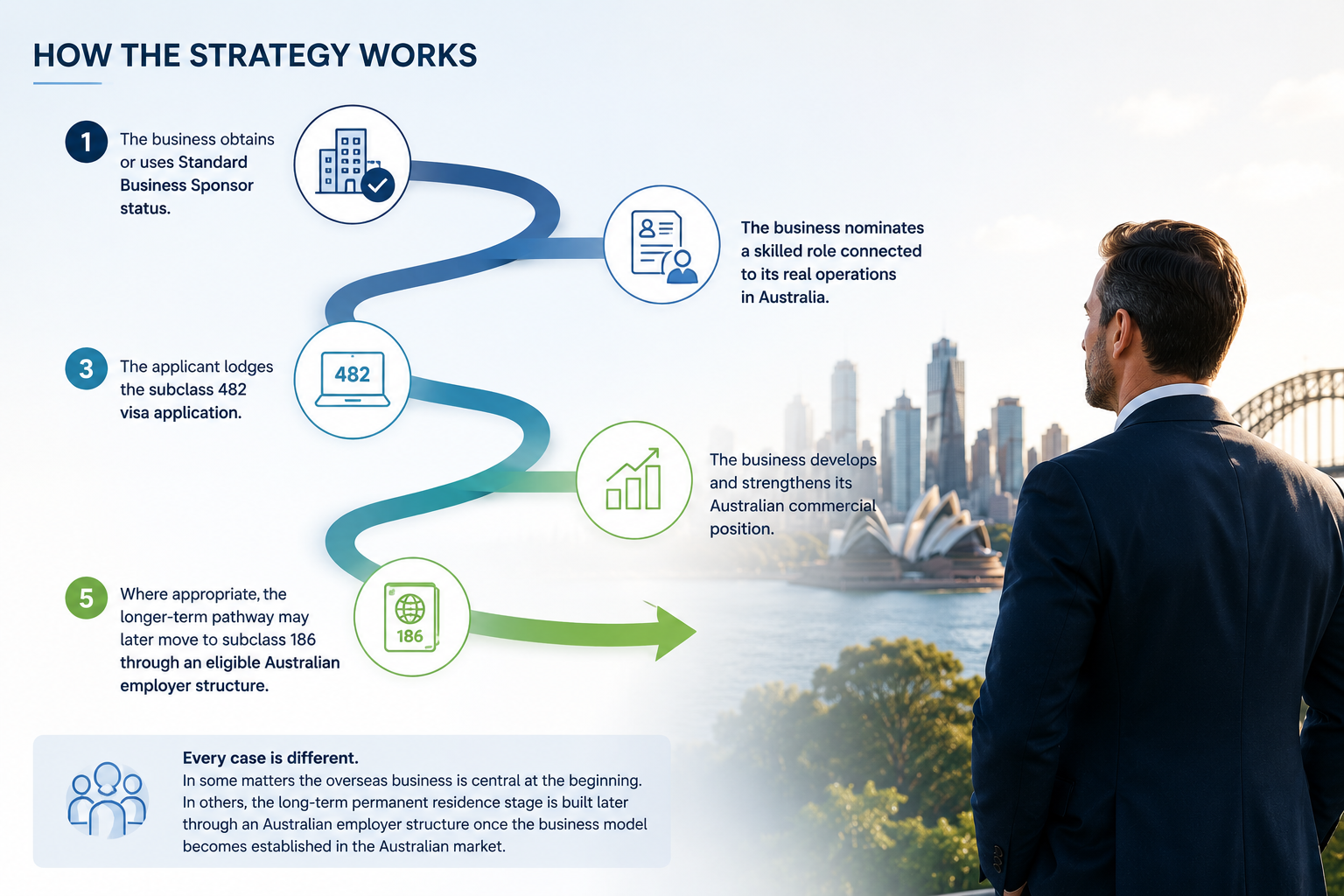
- The business obtains or uses Standard Business Sponsor status.
- The business nominates a skilled role connected to its real operations in Australia.
- The applicant lodges the subclass 482 visa application.
- The business develops and strengthens its Australian commercial position.
- Where appropriate, the longer-term pathway may later move to subclass 186 through an eligible Australian employer structure.
Every case is different. In some matters the overseas business is central at the beginning. In others, the long-term permanent residence stage is built later through an Australian employer structure once the business model becomes established in the Australian market.
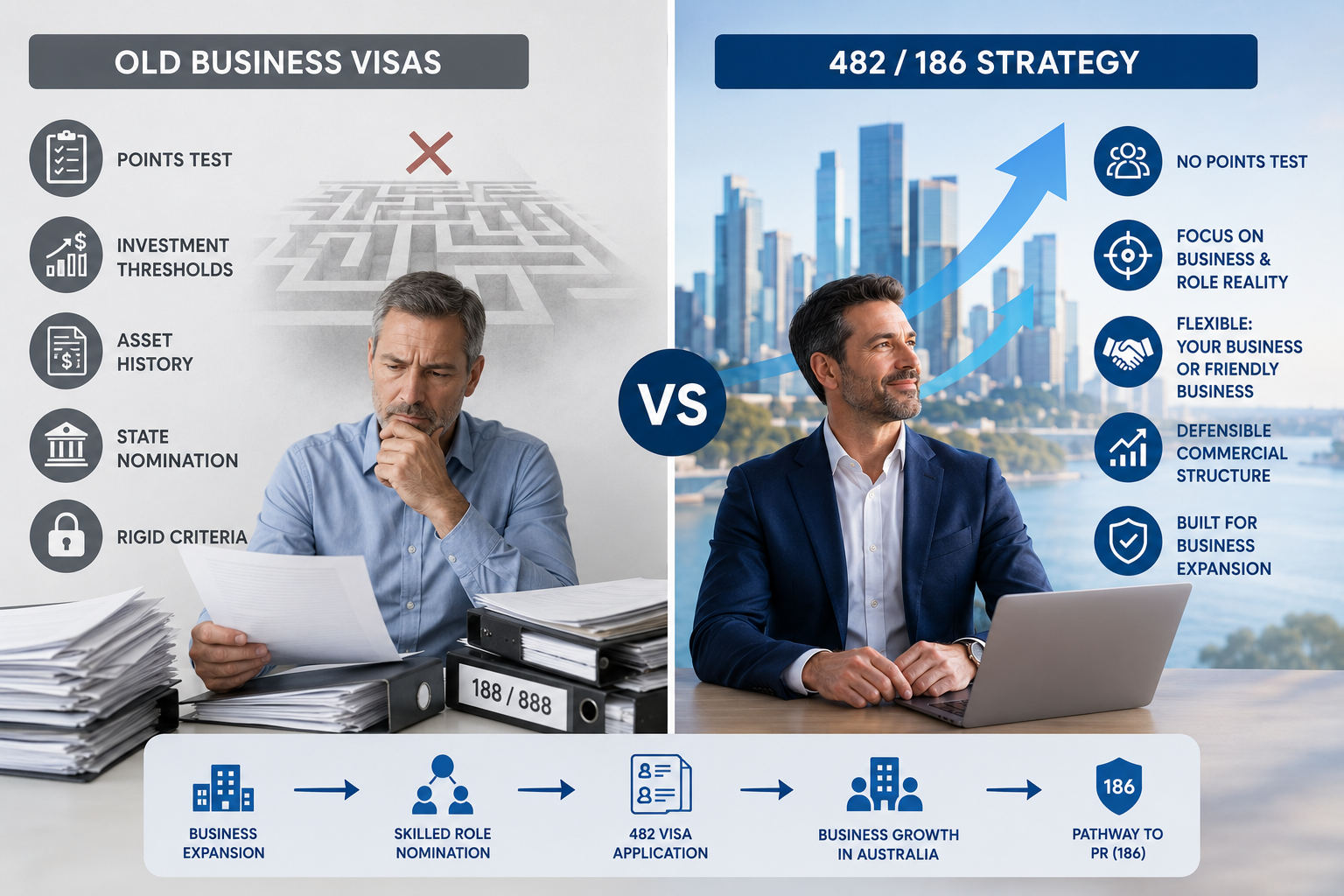
The old 188/888 framework was built around business migration in the traditional sense: state nomination, points, investment thresholds, asset history, and rigid formal criteria.
The 482/186 strategy is different. It is legally an employer-sponsored pathway, but commercially it can operate as a business expansion model.
- There is no business visa points test in the way the old 188 streams required.
- The focus is not on proving old-style business visa thresholds and asset history in the same way.
- The strategy can sometimes work through your own business or a friendly business, not only through a classic investor model.
- The emphasis is on business reality, role reality and a defensible commercial structure.
This does not mean the new model is easier. In fact, it is often more complex. But for the right entrepreneur it can be more flexible and more powerful.

The Department is not interested in business ideas on paper alone. It looks at whether the business and the nominated role are genuine.
Registering a company by itself is not enough. Leasing premises by itself is not enough. Buying equipment by itself is not enough.
A stronger case usually shows real commercial activity, for example:
- existing operations and turnover
- clients or contracts
- negotiations or market entry steps
- supplier or partner relationships
- evidence of actual expansion into Australia
- a genuine need for the nominated person in that role
This is why strategy matters. The strongest cases are built around evidence of a real business story, not just a migration intention.
- More strategic flexibility than the old business visa programs
- Can be built around real commercial growth rather than passive investment
- May suit applicants whose path through a standard skills route is weak or unavailable
- Can allow the migration strategy and business expansion strategy to run together
- In suitable cases, may later support a permanent residence pathway through subclass 186

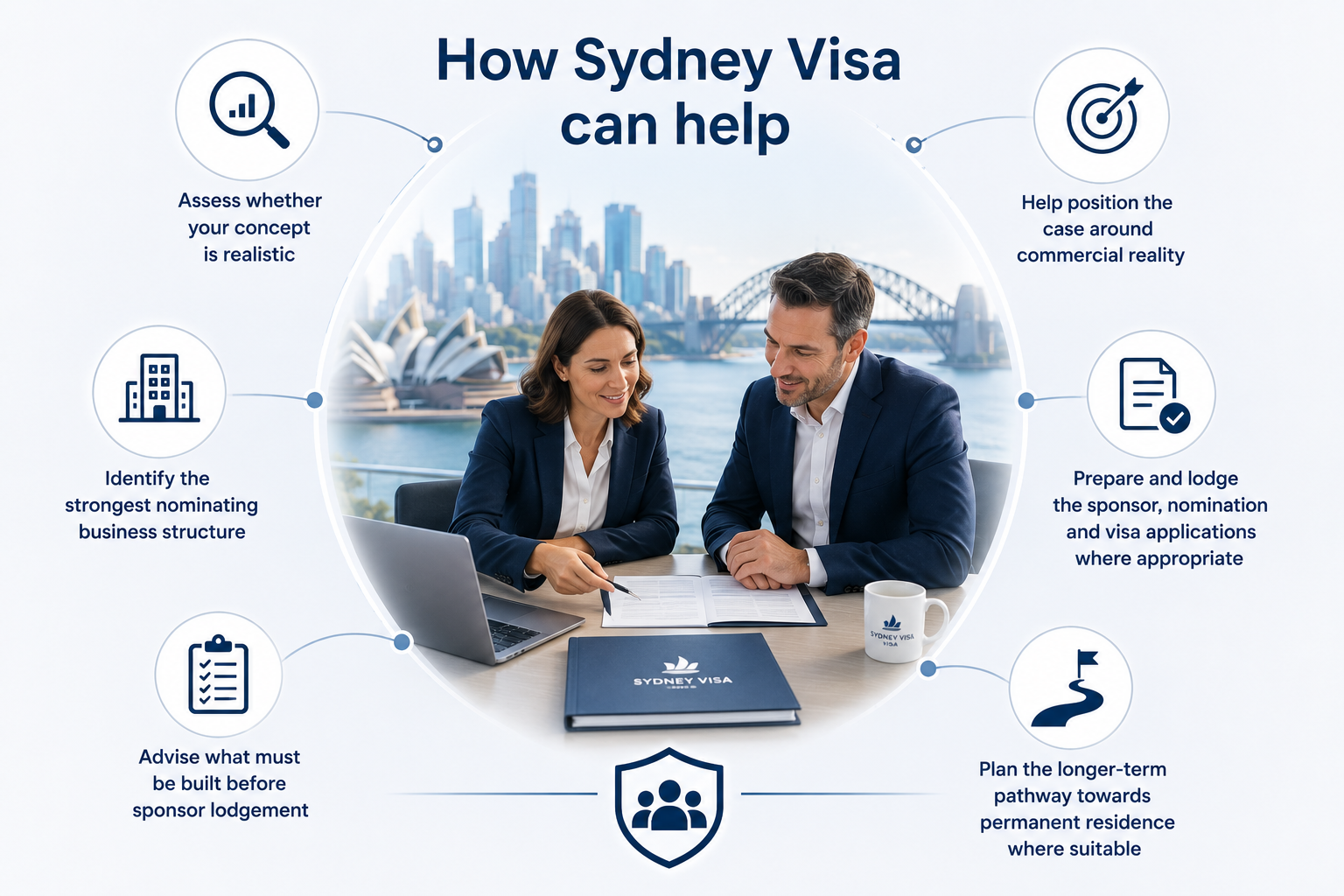
- Assess whether your concept is realistic
- Identify the strongest nominating business structure
- Advise what must be built before sponsor lodgement
- Help position the case around commercial reality
- Prepare and lodge the sponsor, nomination and visa applications where appropriate
- Plan the longer-term pathway towards permanent residence where suitable
The latest from Australian Migration news, information, announcements, developments and articles about Immigration and Visas to Australia.
More details:
Immigration to Australia from Nepal
Immigration to Australia from Nepal usually starts with one thing: choosing the correct visa pathway and proving eligibility with consistent documents. Nepali citizens most often consider options for skilled work, employer sponsorship, study, family stream visas, or temporary travel. On this page you will find a clear workflow, what professional migration support includes, which pathways are commonly discussed, and what to prepare before starting a case.
What immigration to Australia from Nepal involves
Immigration is a process with strict criteria that differ by visa type. The practical goal is not “to submit something”, but to build a coherent case: eligibility, documents, and a plan that matches your profile and timeline.
Who this service is designed for
This advisory support is relevant if you are a Nepali citizen planning to move to Australia for work, study, family reunion, business plans, or if you want to understand whether permanent residency pathways are realistic in your situation.
Typical goals: work, study, family, business
Most enquiries can be grouped into a few decision tracks:
- Work and long-term settlement planning
- Study with a potential future pathway
- Partner or family stream options
- Temporary stay for travel or specific purposes
- Complex cases, including past refusals or cancellations
When you should start with an eligibility check
An eligibility assessment is useful when you want to avoid spending time on a pathway that does not match your profile. It helps structure the next steps and clarifies what evidence will be required.
Why professional migration advice helps
Australian visa requirements can be detailed, and small inconsistencies can create delays. Professional advice helps reduce procedural risk and improves clarity before you start the application process.
Visa pathway selection and eligibility risks
A common problem is selecting a visa type based on a general idea (for example, “skilled” or “PR”) without confirming that the criteria match your background. A structured assessment helps identify realistic options and the sequence of actions.
Document quality and consistency requirements
Many cases depend on how well your documents support the story of your application. Consistency across identity, education, work history, and supporting evidence matters.
Common reasons applications are delayed or refused
Applicants often face issues due to incomplete documentation, missing evidence, inconsistent information, or misunderstanding of requirements. A checklist-based approach reduces avoidable errors.
What is included in visa and migration support
A clear scope helps you understand what you receive and what you remain responsible for as an applicant. Below is the typical structure of case support.
Eligibility assessment and next-step plan
You start with an assessment that clarifies the likely visa direction and what needs to be prepared next.
Document checklist and preparation guidance
A structured checklist helps you collect and prepare documents in the required order, with attention to consistency.
Application drafting and submission support
Support includes preparing the application logic, ensuring the case is presented coherently, and assisting with submission steps.
Case monitoring and request management
After submission, the case is monitored, and official requests are managed in an organized way.
Representation and communication with authorities
Where applicable, the case can include communication support with the Department of Home Affairs as part of professional case handling.
Step-by-step case workflow
- Eligibility assessment and pathway selection
- Document checklist and preparation plan
- Application preparation and review
- Submission support
- Tracking, updates, and request handling
Table: What is included
| Option | What it includes | Who it suits |
| Eligibility assessment | Initial review of profile and direction | First-time applicants deciding on a pathway |
| Consultation | Focused discussion of visa options and risks | Applicants who need clarity and a plan |
| Application support | Document checklist, preparation guidance, submission support | Applicants ready to proceed with an application |
| Case management | Ongoing tracking and handling of requests | Applicants who want structured support after submission |
Visa pathways commonly considered by Nepali citizens
Different pathways fit different goals. The point is to match your profile and timeline to the correct stream.
Skilled migration (skills-based pathways)
Commonly discussed for qualified professionals who plan to build a long-term pathway based on skills and experience.
Employer sponsored visas
Relevant when an Australian employer is involved and sponsorship is available.
Student visas and post-study pathways
Used for education-driven entry, with planning for future options where relevant.
Partner and family stream visas
Suitable for eligible partner or family-based pathways with evidence requirements that must be prepared carefully.
Visitor and temporary visas
Used for short-term stay purposes, where correct documentation and intent clarity matter.
Support for refusals and cancellations
If a case includes refusal or cancellation history, it requires careful structuring and a realistic pathway approach.
Consultation formats and how to start
You can begin with a format that matches your location and availability.
Online consultation for Nepal-based clients
Online consultation allows Nepal-based applicants to discuss eligibility, visa options, and next steps remotely.
In-person consultation in Sydney
In-person consultations are available for clients who are in Sydney and prefer face-to-face discussion.
What information to prepare before a call
To make the consultation productive, prepare:
- Your main goal (work, study, family, business, temporary stay)
- Basic timeline (when you want to start or move)
- Education and work summary
- Any previous visa history (if applicable)
- Key documents you already have
Fees and factors that affect service cost
Fees depend on the scope and complexity of the case. A clear understanding of complexity helps you choose the right format of support.
What influences fees for migration services
Typical factors include visa type, number of applicants in the case, and the amount of document preparation required.
What affects complexity and timelines
Complexity grows when there is extensive documentation, multiple applicants, or prior adverse history.
Why clients choose Sydney Visa
Sydney Visa provides visa and migration advisory services related to Australian immigration law, including consultations and visa application support.
Registered migration agents and advisory scope
Cases are handled within the scope of registered migration services and structured case support.
Experience since 2001 and case management approach
The practice is positioned as operating since 2001, with a process-oriented approach to case management.
Transparency and client communication principles
Clients typically value clarity on steps, documents, and what happens next after the initial enquiry.
Practical questions before applying
- What documents are commonly required
Most visa pathways involve identity documents and supporting evidence related to your purpose of travel or migration (education, work, family, or sponsorship evidence).
- How long the process can take in practice
Timeframes differ by visa type and case complexity. The useful first step is to define the pathway and prepare documents correctly, because this often determines how smooth the process is.
- What happens after you submit an enquiry
After you submit an enquiry, the next step is usually an initial review followed by consultation to define the pathway and document plan.