




We are Visa and Migration Advisory Service – a team of professionals with vast experience in the legal matters relating to Australian visa and migration law. We have the highest success rate with majority of our clients receiving positive outcomes on their visas.


We feel a great personal responsibility for every case that we take on. We realize with all our heart that behind every case is the fate of a person and his or her entire family. That’s why, if we take on a client, we combine all our resources, energy and faith to ensure the success!
Before taking the case, we assess a potential client’s eligibility for an Australian visa. Other agents have turned down many of our clients, who successfully remained in Australia with our help.

New Australians Created
Successful Visa Applications
We have been successfully helping people to migrate to Australia for over 20 years and know Australian immigration law insight out. However, we totally understand that most people might not understand how to immigrate to Australia, what paths are available, where to begin etc. If you are new to the notion of relocating to Australia, this article is for you.
Four major paths pf Australian immigration:
This is it! You might notice that there is no “Immigration to Australia through Education” or “Work in Australia and then stay in the country” programs. Temporary work and study in Australia do not lead to permanent residency on their own. After working or studying in Australia, you are most likely to go via the Skilled Migration route, if you want to migrate to Australia for good.
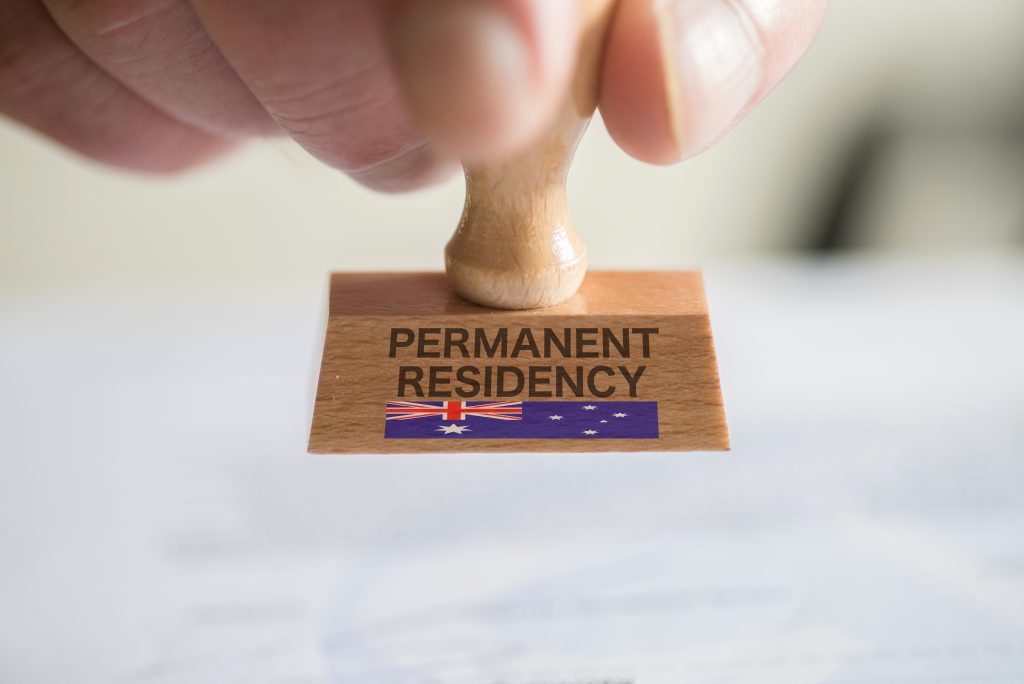
There are more than 120 types of visas to Australia. In addition, the Australian immigration law is constantly evolving. It can be quite challenging to complete a visa application correctly and hope for a positive result without the knowledge of nuances of Australian visa and immigration legislation.
Contact us today by fill up free online visa assessment and we will contact you
Want to live and work in Australia?
To qualify, you must be under 45, speak English well, and have skills in demand on Australia’s Skilled Occupation List. Your work experience and job tasks often matter more than your diploma title.
Main visa options:
- Subclass 189: Skilled Independent – no state or employer sponsorship required.
- Subclass 190: Skilled Nominated – requires state or territory nomination.
- Subclass 491: Skilled Work Regional – regional nomination or family sponsorship.
Watch our video blog for a step-by-step explanation or visit the Skilled Migration page for full details.


Australia is home to six of the world’s top 100 universities: University of Melbourne, Australian National University, University of Sydney, University of Queensland, University of New South Wales, and Monash University.
Seven Australian cities – Melbourne, Sydney, Brisbane, Canberra, Adelaide, Perth, and the Gold Coast – are ranked among the best student destinations globally.
With a Student Visa (subclass 500), you can:
- Enrol in a recognised course
- Work part-time during studies
- Bring family members with you
This visa may open pathways to permanent residency after graduation. For details, visit the Student Visa page.
Bring your loved ones to Australia without points tests or English exams. You must have a close family member who is an Australian citizen or permanent resident.
Visa options:
- Partner Visas – for spouses, de facto partners, and fiancés/fiancées. The Department of Home Affairs checks relationship evidence carefully. Application fees are high and non-refundable if refused, so many couples work with registered migration agents.
- Parent Visas – for parents meeting the Balance of Family Test (at least half of your children live in Australia).
- Other Family Visas – for children, remaining relatives, or carers under specific conditions.
Visit the Family Migration page for eligibility and document requirements.


This path is for those individuals that have plenty of money or a serious experience running a business. Minimum requirement for this visa is total net business and personal assets of at least AUD1.25 million.
This path might suit businessmen or investors that are under 55 years of age and have no English, as there are visas within the Business Migration stream that allow Australian immigration without English knowledge (you would need to pay a fee of about AUD$10000 for the English classes through).
Here you will find more information about various business programs and its requirements.
Australian businesses can sponsor skilled workers when local talent isn’t available. To qualify, workers must have a relevant occupation , meet skills and English criteria, while employers must:
- Provide a full-time contract
- Pay the market salary rate
- Contribute to the Skilling Australians Fund
Key visa options:
- Subclass 482: Temporary Skill Shortage – 2–4 years, possible PR pathway
- Subclass 494: Skilled Regional – up to 5 years, with PR option
- Subclass 186: Employer Nomination Scheme – permanent residency
Get full guidance on obligations and requirements on the Employer Sponsored Visas page.


Planning a short stay, family visit, or business trip?
Visa options:
- Tourist & Visitor Visas (subclass 600, ETA 601, eVisitor 651) – for tourism, visiting family, or business trips. ETA and eVisitor visas offer quick online approval for stays up to 3 months for eligible nationalities.
- Working Holiday Visas (subclass 417, 462) – for young people wanting to work and travel in Australia.
- Training & Temporary Activity Visas (subclass 407, 408) – for training, research, or cultural exchange activities.
For more information about applying for a Tourist Visa or Visitor Visa to Australia, please visit the Short-Stay Visa page.
We’ll help you pick the right visa for your trip.
The latest from Australian Migration news, information, announcements, developments and articles about Immigration and Visas to Australia.
More details:
Immigration to Australia from South Korea
Immigration to Australia from South Korea usually starts with one practical question: which visa direction is realistic for your profile and what evidence must support it. This page is built for applicants who want paid consultation and structured support, including eligibility assessment, document planning, and application assistance. The goal is not to overwhelm you with visa names, but to give you a pathway plan you can follow, a checklist you can act on, and a clear view of what happens after you book.
What this service is and who it suits
This section helps you quickly decide whether professional migration support is the right next step for you. A consultation is most useful when you want to compare pathways, reduce uncertainty, and avoid common document mistakes that cause rework. Instead of collecting documents randomly, you start with a roadmap: what to prepare first, what to keep consistent, and what to clarify early so the application remains coherent.
Applicants from South Korea often approach the process with strong preparation habits, but the visa process still becomes stressful when there is no single plan that ties goals, timeline, and evidence together. Support is designed to convert your intent into a structured process: assessment, evidence priorities, staged document collection, and submission readiness. If you plan to include a partner or family members, or you have a complex employment timeline, structure and consistency checks become even more valuable.
Who typically books migration support from South Korea
- People who want to migrate to Australia from South Korea and need a realistic visa pathway plan before committing time to paperwork. Many clients are comparing skilled migration vs employer sponsored options, and they want a clear direction based on their background and timeline. 1) Define the goal and timeframe 2) Shortlist viable pathways 3) Turn the shortlist into a staged action plan with evidence priorities.
- Professionals who already collected documents and want a structured review that converts scattered files into a consistent case. This is common when there are multiple employers, gaps in work history, or mixed document formats that need to align in dates and job titles. 1) Build a clean chronology 2) Identify inconsistencies early 3) Create a roadmap for what to fix, clarify, or strengthen before submission.
- Families planning a joint move who need one coordinated checklist and a single timeline, not separate advice for each person. Consistency is the biggest risk in multi-applicant cases, so planning focuses on matching names, dates, addresses, and shared history across all documents. 1) Align personal details across the household 2) Assign document responsibilities 3) Build one consistent evidence pack that supports the chosen pathway.
Why a structured visa plan matters
This section explains why planning is the fastest way to reduce delays. A structured plan connects your story to the evidence that supports it, and it sets the order of actions so you do not rebuild the case later. Many applicants lose time by starting with forms first and only later discovering missing documents or contradictions that require revisions and repeated checks.
A good plan also prevents noise. Instead of collecting everything, you collect what supports eligibility and the core narrative, then add supporting documents in layers. This staged approach is simpler to manage, easier to review, and less likely to create conflicting details. For decision-making, a plan gives you clarity: what you can prove, what needs strengthening, and what timeline is realistic for preparation.
What you receive after a visa eligibility assessment
- A pathway-focused summary you can act on, written to support decisions rather than general reading. You get a shortlist of realistic directions and a clear view of what must be proven, so you know what to prepare first and what can wait. 1) Confirm viable directions 2) Identify evidence priorities 3) Build a sequence of next steps that matches your goal and timing.
- A document roadmap that reduces rework and late changes. Instead of collecting documents randomly, you build a staged checklist with checkpoints for consistency and completeness. 1) Build a core evidence pack 2) Add supporting documents by priority 3) Run consistency checks before final compilation.
- A risk map that highlights what tends to slow cases and what can be strengthened early. Clients often feel calmer when risks are explicit and the next actions are clear. 1) Identify the top risk points 2) Decide what to clarify or strengthen 3) Create a clean submission structure around consistent evidence.
What is included and how support works
This section describes what the service covers in practical terms and how the workflow is organized. The aim is predictability: you know what happens after you contact the team, what you should prepare, and how progress is tracked. Support can start with a consultation and assessment, and then expand to document planning and application assistance depending on your situation and how much coordination you want.
Online consultations make it possible to start from South Korea without travel, using a staged document plan and review checkpoints. In-person consultations are available in Sydney for clients who prefer a face-to-face discussion and concentrated review. In both formats, the approach stays the same: pathway clarity first, then evidence priorities, then structured preparation toward submission.
Before the table below, use it to choose the support level that matches your needs. Some clients only want a pathway plan and a checklist. Others want ongoing coordination, document review, and case tracking so each stage stays consistent.
Option | What it includes | Who it suits |
Eligibility assessment and pathway plan | Goal and profile review, shortlist of realistic visa directions, evidence priorities, next-step checklist | Applicants who want clarity before deeper preparation |
Consultation plus document roadmap | Pathway plan plus staged checklist, consistency guidance, evidence structure planning | Applicants who want structured preparation and fewer revisions |
Application support and case coordination | Preparation and submission support, document pack review, staged checkpoints, progress updates | Applicants who want end-to-end coordination |
After the table, the key takeaway is that complexity drives the value of coordination. If you have multiple applicants, timeline gaps, or prior visa issues, staged review and consistency checks often reduce stress and reduce rework. Many clients start with an assessment and then extend support once the pathway is confirmed.
Visa pathways: options to consider
This section helps you compare common directions in a consultation-driven way. The focus is commercial: pathway selection, evidence planning, and preparation support. The goal is to choose a realistic direction and build a document roadmap that supports it, rather than switching pathways mid-process after investing time in the wrong checklist.
Skilled migration planning: how to prepare a consistent case
- Skilled migration is often considered when your education and professional background can be presented clearly and consistently with supporting evidence. The value of support is confirming viability and building an evidence roadmap that is realistic and easy to execute. 1) Map education and work chronology 2) Identify strongest supporting documents 3) Build a staged checklist with early consistency checks.
- Complexity rises when your employment history includes multiple roles, gaps, or documents issued in different formats that must align in dates and titles. A structured plan helps you identify weak points early and decide how to present a coherent timeline. 1) Identify inconsistency risks 2) Align dates and role titles 3) Build a clean narrative supported by documents rather than assumptions.
- A strong case is usually more about clarity than volume. Planning helps you avoid overloading the pack with unrelated items while still covering what matters. 1) Prioritize core evidence 2) Add supporting documents only where they strengthen the story 3) Review the pack for coherence before finalizing.
Employer sponsored planning: what to align early
- Employer sponsorship is often considered when there is a clear employment direction and you want to understand what evidence and sequencing will be required. Clients value support because it clarifies what must be aligned between applicant and employer, and what should be prepared early. 1) Confirm role alignment with your background 2) Build a shared evidence plan 3) Set checkpoints to keep documents consistent.
- The main risk is starting with assumptions and correcting late. A structured approach clarifies responsibilities and makes the case easier to manage. 1) Clarify what the employer provides 2) Clarify what you provide 3) Align timeline and narrative across documents.
- Coordination matters when multiple inputs must align. A staged plan keeps progress predictable and reduces last-minute changes. 1) Set a timeline with checkpoints 2) Review drafts and documents in stages 3) Keep updates and next actions clear.
Fees: what influences the cost of support
This section explains what typically influences fees without listing numbers. Pricing usually depends on case complexity, number of applicants, the chosen pathway scope, and how much coordination you want. Some clients only need a consultation and pathway plan. Others prefer ongoing support with document review, staged checkpoints, and case tracking so progress remains predictable.
A practical way to think about fees is to focus on workload drivers: more applicants means more documents and more consistency checks. Prior refusals or cancellations often require more careful organization and planning. If you want full support through preparation and submission, the scope is larger than a single assessment session.
Before the table below, use it to choose a working format that fits your schedule. The difference is not only location, but also how you want communication and checkpoints to be structured.
Format | Timeframe | Features | When to choose |
Online consultation | Scheduled session | Remote planning, staged checklist, document priorities, review checkpoints | When you want to start from South Korea without travel |
In-person consultation in Sydney | Scheduled session | Face-to-face discussion, practical document review, decision clarity | When you prefer in-person planning |
Ongoing application support | Case-based | Structured preparation, document pack review, progress updates | When you want end-to-end coordination |
After the table, a simple first step is to request an assessment and prepare a short profile summary: your goal, timing, and a clean education and employment timeline. This makes the first conversation focused and helps you receive a pathway plan and checklist you can use immediately.
Why clients choose Sydney Visa
Sydney Visa provides visa and migration advisory services related to Australian immigration law, including consultations and visa application support. The team supports clients worldwide, with online consultations and in-person consultations available in Sydney.
The agency has been providing migration services since 2001. Services are delivered by registered Australian migration agents, including MARN 0103440 and Migration Agent No 1683658. Clients often choose a structured workflow that starts with an assessment and then moves to evidence planning, staged review, and coordinated preparation, because it keeps the case consistent and reduces avoidable rework.
FAQ and next steps
This section helps you prepare for a useful first conversation and understand what happens after you contact the team. A productive consultation depends on clarity: goal, timing, and a clean chronology. If family members may be included, it helps to list who is involved and the intended plan for the move so the pathway discussion stays realistic and structured.
FAQ
- What should I prepare before the first consultation?
Prepare a short summary of your goal and timeline, then outline your education and employment history in chronological order with clear dates. If a partner or family members may be included, list who is involved and how your timeline connects. This preparation helps the consultation deliver a pathway plan and staged document checklist rather than a broad discussion. - Do you work with clients outside Australia?
Online consultations are available and are a common way to start planning immigration to Australia from South Korea. A staged workflow works well remotely when you follow document priorities, keep timelines consistent, and review in checkpoints. This approach helps you progress steadily without collecting evidence randomly. - Can you help if my case is complex or I had a refusal before?
Support can be structured for complex situations, including cases where careful case history organization and risk planning is needed. Many applicants prefer structured support here to identify risk points early, prioritize evidence, and avoid repeating weaknesses. The goal is a clear roadmap and predictable next actions. - What happens after I contact you?
After you reach out, the first step is typically an eligibility assessment or booking a consultation time. You will be guided on what details to share so the discussion stays pathway-focused and evidence-driven. If you proceed with support, work usually moves into staged document planning with review checkpoints and progress updates.
Book an assessment
If you want immigration to Australia from South Korea with a clear pathway plan and structured support, start with an assessment and consultation. Call +61 283 112 398 to book a time and outline your goal. For messages, use WhatsApp at +61 466 594 832 and request an assessment to confirm the best next step for your case.